


PEI has long been used for parts that must withstand hot food and washing — coffee-machine parts, catering trays, cookware. Can PPSU take that place? We set the two datasheets side by side on identical test methods and looked at the EU bisphenol regulation as well.
PPSU is the first alternative to food-contact PEI
It is an amorphous high-temperature resin of the same tier, with heat resistance on the same level (glass transition 220 vs 217°C, heat deflection 197 vs 192°C). In March 2026 BASF announced support for switching household and catering food-contact articles from PESU, PSU and PEI to PPSU.
The gap is in impact
Charpy notched impact is 70 vs 4 kJ/m². For parts that are dropped, knocked and run through dishwashers, that changes the margin against breakage. PEI is stiffer (3,200 vs 2,250 MPa), so check deflection on thin, long parts.
PPSU is not affected by the EU bisphenol regulation
PEI's monomer is synthesised from bisphenol A, so food-contact PEI parts are likely to fall within the residual-BPA check of Regulation 2024/3190. BASF states that bisphenols as defined in the regulation are not used to make Ultrason P.
PEI is polyetherimide, usually called by SABIC's trade name, ULTEM™. For food contact there are grades such as ULTEM 1000F and 1010F, listed by distributors as food-contact compliant, and they have been used in catering trays, cookware and coffee-machine parts that must withstand hot washing and microwaving.
PPSU is polyphenylsulfone, the toughest member of the sulfone family (PSU, PESU, PPSU). BASF supplies it as Ultrason P and names reusable bottles, catering tableware, coffee-machine components and high-heat pans as food-contact applications.
Both are amorphous and amber-transparent, and both reach UL94 V-0 without flame-retardant additives. Their glass transition temperatures are 3°C apart. That is why the comparison holds, and why the differences show up in impact, stiffness and regulatory paperwork.
| PPSU | PEI | |
|---|---|---|
| Maker | BASF SE | SABIC |
| Trade name | Ultrason P | ULTEM |
| Grades compared | P 3010 (standard) · P 2010 (high flow) | 1000 · 1010 (1000F · 1010F for food contact) |
| Feedstock and bisphenols | No bisphenols as defined in Regulation 2024/3190 (BASF) | Monomer BPADA synthesised from bisphenol A (BPA) |
| Production in Korea | Yeosu plant | None — imported |
| Food-contact documents | EU and US food-contact approval (BASF), certificates by grade | Supplier's declaration of compliance, by grade |
Source: BASF press releases P-26-039 (10 March 2026) and P-19-413 (9 December 2019) · each product's TDS
| Item | Method | PPSU · Ultrason P 3010 | PEI · ULTEM 1000 / 1010 |
|---|---|---|---|
| Charpy notched impact 23°Cresistance at scratches and corners | ISO 179/1eA | 70 kJ/m² | 4 kJ/m² |
| Charpy unnotched impact | ISO 179/1eU | No break | No break |
| Glass transitionwhere it starts to soften | ISO 11357 | 220°C | 217°C |
| Heat deflection (1.8 MPa)where it starts to bend under load | ISO 75 | 197°C | 192°C |
| Tensile modulusstiffness | ISO 527 | 2,250 MPa | 3,200 MPa |
| Yield stress | ISO 527 | 74 MPa | 110 MPa |
| Yield strainstretch before permanent deformation | ISO 527 | 7.8 % | 6 % |
| Thermal expansion | ISO 11359 | 55 E-6/K | 52 E-6/K |
| Density | ISO 1183 | 1.29 g/cm³ | 1.27 g/cm³ |
| Water absorption (23°C, saturated) | ISO 62 | 1.2 % | 1.25 % |
| UL94 V-0 minimum thickness | UL 94 | 1.5 mm | 0.75 mm |
PEI values are items where ULTEM 1000 and 1010 are the same; the standard-grade datasheet values are also used for the food-contact F grades. All are representative values, not specification values.
Source: BASF Ultrason P 3010 TDS · SABIC ULTEM 1000 and 1010 Global TDS (2026)
Impact is seventeen times higher. Charpy notched impact is 70 vs 4 kJ/m². Notched impact is resistance where stress concentrates — scratches, corners, gate marks. A catering tray dropped on the floor, a coffee-machine part pressed during assembly, parts knocking together in a dishwasher: all of these sit here. BASF states that the notched impact of Ultrason P is almost ten times that of other amorphous high-temperature materials.
Heat resistance is on the same level. Glass transition 220 vs 217°C and heat deflection 197 vs 192°C — PPSU slightly higher. At boiling-water, steam and dishwasher temperatures both materials have ample margin. BASF states that Ultrason P withstands superheated steam sterilisation at 134°C.
PEI is stiffer. Tensile modulus is 3,200 vs 2,250 MPa, about 30% lower for PPSU. Recalculate deflection on thin, wide trays and long levers, and add ribs where needed. Snap-fits and hinges that flex repeatedly gain margin instead, from the lower modulus and the higher yield strain (7.8 vs 6%).
Water and dimensions. Saturated water absorption is similar at 1.2 vs 1.25%. Moulding shrinkage is left out of the table because the two makers use different test methods. The datasheet values are 0.9% for PPSU (ISO 294-4) and 0.5–0.7% for PEI (SABIC method) — PPSU's is larger, so re-check dimensions when moving to the same tool.
Flame rating. Both reach UL94 V-0 without flame-retardant additives. The minimum thickness is 1.5 mm for PPSU and 0.75 mm for PEI. Where a flame rating is a specification requirement, as for parts inside appliances, check against a 1.5 mm wall.
Regulation (EU) 2024/3190 bans the use of bisphenol A (BPA) and its salts in the manufacture of food-contact materials and articles. It entered into force on 20 January 2025, and the main transition period closed on 20 July 2026.
The regulation does not deal only with direct use of BPA. It separately addresses BPA used as a precursor to synthesise other monomers, and requires that food-contact articles manufactured using another bisphenol or a bisphenol derivative contain no residual BPA (Article 4). The Commission's implementation guidance refers to a detection limit of 1 μg/kg. The declaration of compliance that accompanies an article states whether bisphenols were used.
This is where PEI meets the provision. BPADA (bisphenol A dianhydride), the monomer of ULTEM-type PEI, is synthesised from the sodium salt of bisphenol A. Whether any BPA remains in the finished resin depends on the grade and the manufacturing process, and can only be confirmed from the supplier's test data. But because the resin is made from a monomer that starts from BPA, food-contact PEI parts placed on the European market are likely to fall within the check under this provision.
BASF's guidance points the same way. Its March 2026 press release addresses manufacturers who have been making food-contact articles in PESU, PSU or PEI and sets out the switch to PPSU, stating that bisphenols as defined in Regulation 2024/3190 are not used to make Ultrason P. It adds that existing injection moulding tools for PESU can continue to be used.
This article does not say PEI is banned. Whether an individual grade meets the regulation is for the supplier's declaration of compliance to show. But if the paperwork for European food-contact parts has to be obtained afresh, evaluating PPSU at the same time gets the job done once. Electrical, electronic and medical parts that are not food contact are outside this regulation.
| Material | Feedstock | Under Regulation 2024/3190 |
|---|---|---|
| PC · polycarbonate | BPA-based | In scope — named in the regulation |
| PSU · polysulfone | BPA-based | In scope — named in the regulation (food filtration membranes exempt) |
| PESU · polyethersulfone | BPS-based | Affected — recertification required |
| PEI · polyetherimide (ULTEM) | Monomer (BPADA) synthesised from BPA | Likely within the residual-BPA check — confirm in the supplier's declaration |
| PPSU · polyphenylsulfone | No bisphenols as defined in the regulation | Not affected (BASF) |
The PC, PSU, PESU and PPSU rows are the same as in Octud's EU bisphenol regulation article. The PEI row is Octud's reading based on the monomer's synthesis route and Article 4 of the regulation; it does not determine the compliance of any individual grade.
Source: Regulation (EU) 2024/3190 · Commission implementation guidance C/2025/6721 · BASF press release P-26-039
| Part · requirement | PPSU (P 3010 / P 2010) | PEI (ULTEM 1000F / 1010F) |
|---|---|---|
| Coffee-machine brew units, hot-water and steam parts · constant hot-water contact | Favoured — resistance to superheated steam, detergents, oils and fats (BASF); notched impact 70 kJ/m² | Possible — stiffer, less impact margin |
| Catering trays, high-heat pans and lids · drops · commercial dishwashing | Favoured — large margin against breakage; use up to 180°C (BASF catering material) | Possible — favoured on deflection of thin walls |
| Microwave containers, reusable tableware · repeated heating and washing | Suitable — a BASF application | Suitable — incumbent material |
| Large, thin-walled parts · long flow paths | P 2010 — high-flow PPSU that keeps the notched impact of P 3010 (BASF) | 1010F — high flow |
| Food-contact parts exported to Europe · Regulation 2024/3190 | Favoured — no bisphenols as defined in the regulation (BASF) | Confirm residual BPA in the supplier's declaration |
| Thin, long structural parts · designed to deflection | Conditional — recalculate with a modulus of 2,250 MPa | Favoured — modulus 3,200 MPa |
'Favoured' means one side clearly leads on the datasheets and manufacturers' material; 'suitable' means both are used. This does not replace part-level testing or food-contact compliance checks.
Source: Each product's TDS · BASF press releases P-26-039 and P-19-413 · BASF household and catering material (2021)
The tool is mostly reused. PEI and PPSU have overlapping processing windows. Run trial shots in the existing tool and look at filling and dimensions first. With the larger shrinkage, tight tolerances may need correction. Octud supplies evaluation samples.
PPSU gives more freedom with colour. BASF's material describes PEI as yellow and Ultrason as having a slight honey tint. The paler base widens the colour range, and Octud also advises on colouring with Avient colour solutions.
Documents come by grade. BASF states that it provides datasheets, material certificates and food-contact certificates for six PPSU grades with food-contact approvals. Products sold in Korea additionally need checking against the Korean MFDS standards for utensils, containers and packaging.
For large, thin-walled parts, P 2010. A low-viscosity PPSU BASF introduced in 2019, it keeps the notched impact and stability of P 3010 while filling at lower pressure and temperature. Catering dishes, pans and containers are the target applications. Property data and samples are available on request.
In short. If the paperwork for food-contact PEI parts has to be obtained again, that is the moment to change the material. Heat resistance is on the same level, impact is seventeen times higher, the bisphenol regulation does not affect it according to BASF, and it is produced in Korea. For food-contact parts, evaluate PPSU first.
Frequently asked questions
Food-contact recertification — from material to documents
Tell us your current material, product category and target market, and we will map the conversion route and the certification documents you need. Evaluation samples are availablf charge.
Related reading
More from us
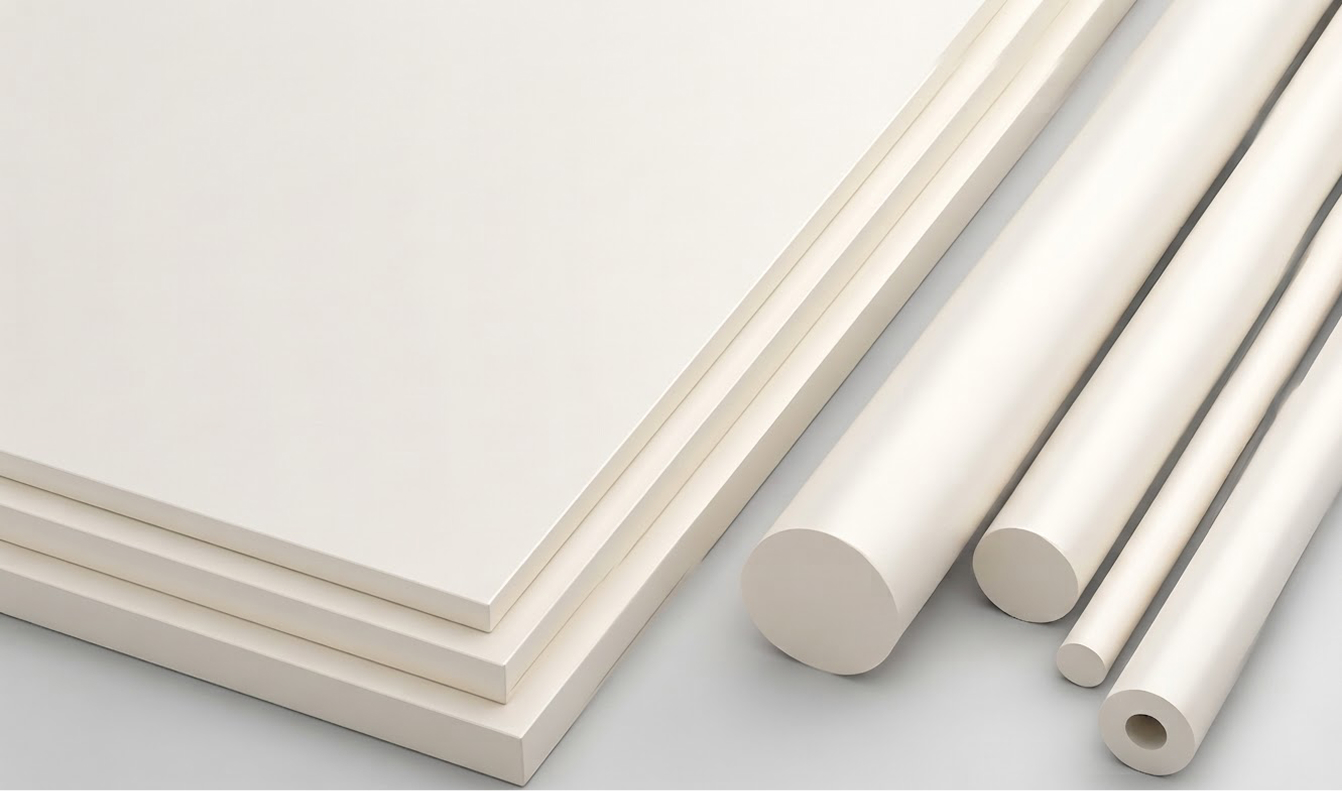
※ Written by Octud from the BASF Ultrason P 3010 TDS, the SABIC ULTEM 1000 and 1010 Global TDS and UL Yellow Card E121562 (2026 edition), BASF press releases P-26-039 (10 March 2026) and P-19-413 (9 December 2019), BASF household and catering material (2021), Regulation (EU) 2024/3190 and Commission implementation guidance C/2025/6721, and published literature on BPADA synthesis. Figures are representative values, not specification values. The standard-grade ULTEM datasheet values are used for the food-contact F grades. The statements on PEI and Regulation 2024/3190 are Octud's reading based on the monomer's synthesis route and the text of the regulation; they do not mean that any particular grade fails to comply, and they are not legal advice. Compliance by grade must be confirmed in the declaration of compliance of the supplier concerned. 'What the table says', the verdicts by part and 'Octud's notes' are Octud's commentary and do not replace part-level testing or food-contact compliance checks. The photo is an Octud stock-shape product image. Octud is the official Korean distributor of BASF Ultrason® and has no affiliation with SABIC. Ultrason® is a trademark of BASF; ULTEM™ is a trademark of SABIC.
Tritan™ and Eastar™ are trademarks of Eastman Chemical Company, INFINO® of Lotte Chemical, and Ultrason® of BASF SE. Competitor product names are used solely for factual identification and comparison, and do not imply affiliation or endorsement.