


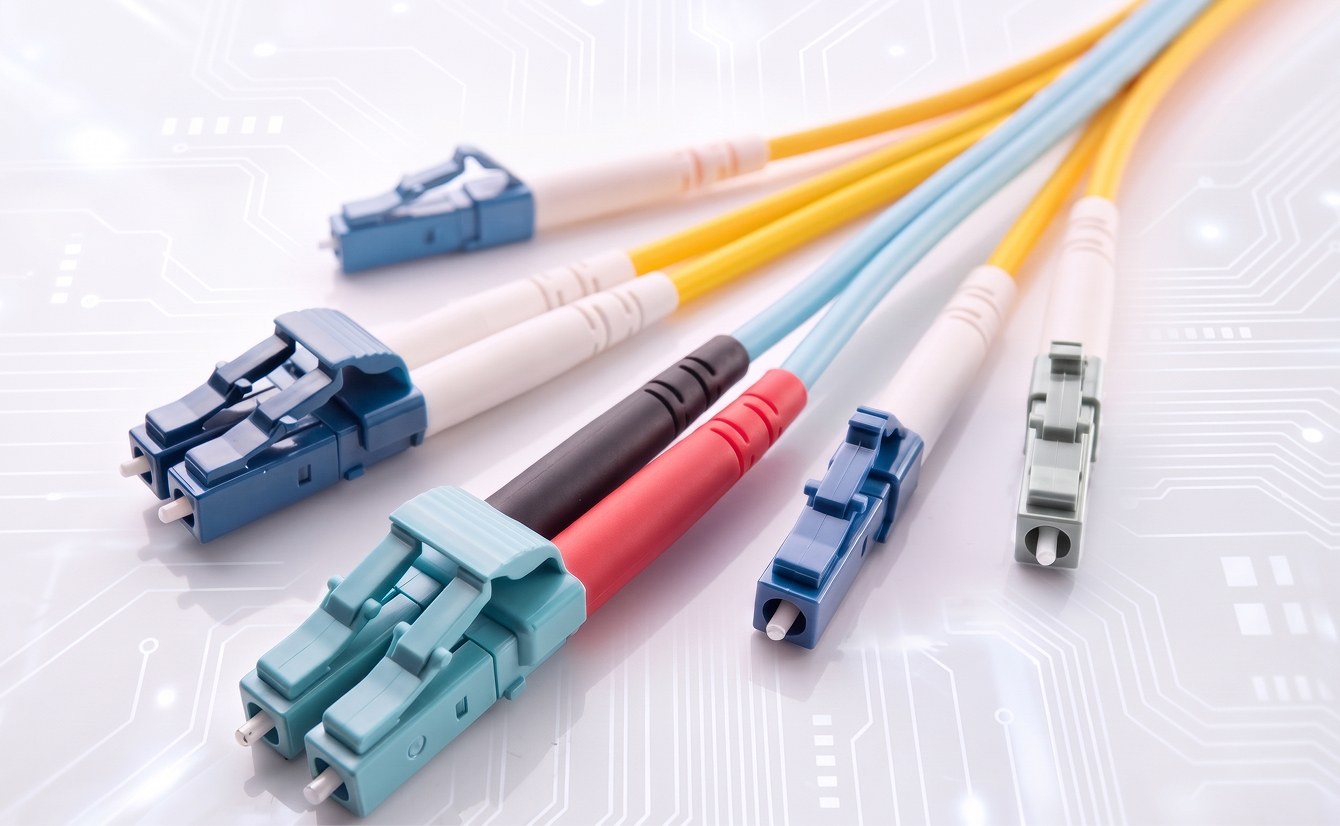
For data-centre part designers PEI is the long-standing default. Can PESU take that place? We set the two datasheets side by side on identical test methods and gave a verdict part by part. With PEI supply unsettled in 2026, this is the comparison we are asked for most.
Same tier, same character
PEI and PESU are both amorphous, transparent-amber, inherently flame-retardant super-engineering plastics, and their processing windows overlap. That is why running a PEI mould on PESU is a realistic conversion.
On heat, impact and arc, PESU leads
On identical methods: UL relative temperature index 180–190 vs 170°C, heat deflection 205 vs 192°C, notched impact 7.5 vs 4 kJ/m², high-amp arc ignition PLC 0 vs 3–4. The 'lower thermal expansion' SABIC's brochure claims is the same value in both TDS (52 E-6/K).
On thin-wall flame rating and GHz dielectrics, PEI leads
If V-0 at 0.75 mm is required, or GHz signals pass through the housing of a high-speed electrical connector, PEI is the right call. For the rest — fibre-optic connectors, cooling fittings, fans, power-distribution parts — PESU wins on both the data and the supply.
PEI is polyetherimide, an amorphous high-temperature resin supplied by SABIC under the ULTEM trademark. It has been used in connectors, IC trays and aircraft interiors since the 1980s, and in data centres it is specified almost by default for fibre-optic connector housings, insulating parts in server power stages and cooling-system fittings.
PESU is polyethersulfone, the member of the sulfone family (PSU, PESU, PPSU) with the highest glass-transition temperature. BASF supplies the family under the Ultrason trademark; PESU is the Ultrason E series. In October 2026 BASF extended Ultrason into AI data-centre, high-speed connectivity and e-mobility E&E parts and positioned it as an alternative to PEI, PEEK and PAI (see the linked article below).
The two sit in the same box of the plastics ladder. Both are amorphous, so dimensionally stable and transparent; both are amber-transparent; both reach UL94 V-0 without flame-retardant additives. Melt temperatures overlap — PESU 340–390°C, PEI 350–410°C. The comparison is a fair one, which is exactly why it has to be made item by item.
Source: Industry classification · manufacturer literature
| PESU | PEI | |
|---|---|---|
| Maker | BASF SE | SABIC |
| Trademark | Ultrason E | ULTEM |
| Grades compared | E 1010 (low viscosity, high flow) · E 2010 (standard) | 1000 (standard) · 1010 (high flow) |
| TDS edition | February 2026 | 2026 (SABIC Material Finder) |
| Production in Korea | Yeosu plant — on stream 2014, expanded 2018 full S, E and P range to the same specification as Ludwigshafen | None — imported |
| Supply in Korea | Octud local stock (E 1010 · E 2010) | Import distributors |
Source: BASF news release P163/18e (11 April 2018) · product TDS
The grades compared are Ultrason E 1010 and E 2010 for PESU and ULTEM 1000 and 1010 for PEI. Each pair is built the same way — a standard-viscosity grade and a high-flow grade. E 1010 is the low-viscosity grade BASF positions for thin-wall LC and MPO connectors; ULTEM 1010 is the grade SABIC describes as 'improved flow'. All four are unreinforced injection-moulding grades, and only items measured by the same international method in both TDS were used. UL items are UL Yellow Card values for both makers.
The PEI datasheets list ISO and ASTM values side by side. We used the ISO values, and where no ISO value exists (UL 746A/B) the UL values. All figures are typical values at 23°C, dry, not specification limits.
Source: ASHRAE TC 9.9 thermal guidelines (A4: 5–45°C) · BASF Ultrason E&E page · product TDS
| Item | Method | PESU · E 1010 / E 2010 | PEI · ULTEM 1000 / 1010 |
|---|---|---|---|
| Glass transitionwhere the material starts to soften | ISO 11357 | 222 / 225°C | 217°C |
| Heat deflection (1.8 MPa)where it starts to bend under load | ISO 75 | 203 / 205°C | 192°C |
| Relative temperature index RTIelectrical · impact · strength | UL 746B | 180 · 180 · 190°C | 170 · 170 · 170°C |
| Tensile modulusstiffness | ISO 527 | 2,650 / 2,640 MPa | 3,200 MPa |
| Yield stress | ISO 527 | 85 / 86 MPa | 110 MPa |
| Yield strainhow far it bends before permanent set | ISO 527 | 6.8 / 6.9 % | 6 % |
| Notched impact 23°Cresistance at scratches and corners | ISO 179/1eA | 6.5 / 7.5 kJ/m² | 4 kJ/m² |
| Notched impact −30°C | ISO 179/1eA | 6.5 / 8 kJ/m² | 4 kJ/m² |
| Unnotched impact | ISO 179/1eU · 180/1U | no break | no break |
| Thermal expansion | ISO 11359 | 52 E-6/K | 52 E-6/K |
| Density | ISO 1183 | 1.37 g/cm³ | 1.27 g/cm³ |
| Water absorption (23°C, saturated) | ISO 62 | 2.2 % | 1.25 % |
| UL94 V-0 minimum thickness | UL 94 | E 1010: 3 mm (V-1 at 1.5 mm) / E 2010: 1.5 mm | 0.75 mm |
| UL94 5VA minimum thickness | UL 94 | E 2010: 3 mm (not listed for E 1010) | 3 mm |
| High-amp arc ignition HAI(PLC 0 is best) | UL 746A | E 2010: PLC 0 / E 1010: PLC 1–2 | PLC 3 (≥3 mm) · PLC 4 (≥0.75 mm) |
| Hot-wire ignition HWI | UL 746A | PLC 1–3 | PLC 1 (≥3 mm) · PLC 2 (≥0.75 mm) |
| Comparative tracking index CTI | UL 746A PLC · IEC 60112 | PLC 4 · 125 V | PLC 4 · 150 V |
| Dielectric strength | IEC 60243-1 | 37 kV/mm | 25 kV/mm (1.6 mm, in oil) |
| Permittivity (1 MHz) | IEC 62631 · 60250 | 3.8 | 2.9 |
| Melt · mould temperature | TDS recommendation | 340–390 · 140–180°C | 350–410 · 135–180°C |
PESU values are E 1010 / E 2010; where ULTEM 1000 and 1010 share a value it is given once. All typical values, not specification limits. For HAI and HWI the PLC (performance level category) is better the lower the number.
Source: BASF Ultrason E 1010 NAT · E 2010 NAT TDS and UL Yellow Card E41871 (February 2026) · SABIC ULTEM 1000 · 1010 Global TDS and UL Yellow Card E121562 (2026)
On heat, PESU is a notch higher. +5–8°C on glass transition and +11–13°C on heat deflection look small, but the gap becomes clear in the relative temperature index UL derives from 20,000-hour ageing: electrical and impact RTI 180 vs 170°C, strength RTI 190 vs 170°C — the same UL 746B basis. For connectors that pass reflow soldering or insulating parts near a power stage, where thermal history accumulates, that 10–20°C comes back as service-life margin.
On impact, PESU is clearly higher. Notched impact 7.5 vs 4 kJ/m² (E 2010 vs ULTEM), and 8 vs 4 at −30°C. This is the value that counts where stress concentrates — scratches, corners, gate marks — and the root of a snap-fit hook is exactly such a place. More on that below.
For power parts, look at arc-ignition resistance. UL 746A's HAI (high-amp arc ignition) grades how many arcs a material survives before igniting. E 2010 holds the best category, PLC 0; ULTEM is PLC 3–4. For busbar holders, breaker latches and fuse holders — data-centre power-distribution parts where arcing is possible — this item matters as much as the UL94 rating.
PEI leads on clear items of its own. Tensile modulus is 20% higher and yield stress higher (good for stiff structural parts). Density is 7% lower and saturated water absorption lower. Permittivity at 1 MHz is 2.9 against PESU's 3.8, so signal loss is lower where high-speed electrical signals pass through a housing. And it holds UL94 V-0 at 0.75 mm — E 2010 at 1.5 mm, E 1010 only V-1 at 1.5 mm. If V-0 is a specification requirement at wall thicknesses of 1 mm or less, narrow the choice to E 2010 or BASF's D series (PESU blend) and confirm.
SABIC's comparison brochure should be re-read against the TDS. SABIC's 'ULTEM as an alternative to sulfone polymers' claims 'up to 17% lower CTE than PES/PPSU', but the ISO 11359 values in both TDS are identical: 52 E-6/K for PESU and PEI. 'Up to 55% higher stiffness' is against PSU; against PESU it is about 20%. A maker's brochure naturally chooses the comparison targets and conditions that favour its own material, which is why the same-method TDS values are the place to return to.
| Part · requirement | PESU (E 1010 / E 2010) | PEI (ULTEM 1000 / 1010) |
|---|---|---|
| Fibre-optic connector housing (LC, MPO) · ~1 mm thin wall · 85/85 · low shrinkage | Suitable — E 1010 high flow, passed BASF 85°C/85% RH test, shrinkage 0.8–0.9% | Suitable — the incumbent material, shrinkage 0.5–0.7% |
| Liquid-cooling fittings and manifolds · continuous glycol coolant contact · hydrolysis | Advantage — sulfones are proven in repeated 134°C steam sterilisation | Possible — maker states hydrolytic stability; long hot-wet exposure to be confirmed |
| Fan blades, air shrouds · dimensional stability · continuous rotation at temperature | Advantage — strength RTI 190°C, identical CTE | Suitable — 20% higher stiffness |
| Busbar holders, breaker latches, fuse holders · arc and hot-wire ignition · CTI | Advantage — E 2010 HAI PLC 0, electrical RTI 180°C | Possible — HAI PLC 3–4, slight edge on CTI 150 V |
| High-speed electrical connector housing · GHz signals · low permittivity | Conditional — permittivity 3.8 | Advantage — permittivity 2.9, 10 GHz loss 0.0027 |
| Wall thickness 0.75 mm or less · V-0 required | E 2010 V-0 at 1.5 mm — decide after checking wall thickness | Advantage — V-0 at 0.75 mm |
| Snap-fit parts · repeated engagement | Advantage — lower modulus, higher yield strain, twice the notched impact | Possible — less margin at the hook root |
| IC trays, test sockets · dimensional stability · low outgassing | Suitable — BASF semiconductor application | Suitable — the incumbent material |
'Advantage' = one side clearly ahead on datasheet and maker application literature; 'Suitable' = both are used; 'Conditional / Possible' = a condition needs confirming. This does not replace part-level qualification testing.
Source: Product TDS · BASF 'Ultrason® for E&E' (2023) · BASF Ultrason E&E page · SABIC ULTEM application literature
- RTI (relative temperature index)
- The continuous service temperature, set by UL 746B long-term ageing, at which a property has not fallen to half. Given separately for electrical, impact and strength.
- HDT (heat deflection temperature)
- The temperature at which a specimen under 1.8 MPa bends by a set amount as it is heated. The practical upper limit for a loaded part.
- Glass transition (Tg)
- The temperature at which an amorphous plastic loses its rigidity and starts to soften.
- HAI · HWI
- UL 746A high-amp arc ignition and hot-wire ignition tests. PLC (performance level category) 0 is best; the higher the number, the more easily it ignites.
- CTI (comparative tracking index)
- The voltage at which insulation begins to break down across a contaminated surface. Higher is better; also expressed as a PLC.
- UL94 V-0 · 5VA
- Vertical-burn ratings. V-0 self-extinguishes within 10 s without flaming drips; 5VA survives a stronger flame without burning through. Always quoted with a minimum thickness.
- Notched impact
- The energy needed to break a notched specimen. Shows how a material holds at scratches, corners and gate marks.
- 85/85 test
- An electronics reliability test — prolonged exposure at 85°C and 85% relative humidity, followed by property and dimension checks.
In a snap-fit, 'lower stiffness' becomes an asset. A lower modulus means lower stress at the hook root for the same deflection, and a higher yield strain (6.8–6.9 vs 6%) means more bend before permanent set. Add notched impact nearly twice as high and a latch or cover clip that is engaged repeatedly has more margin against fracture in PESU. The reverse holds for a thin, long structural part that must not deflect: there the stiffer PEI is right. 'Stiffness' is not good or bad — it is a question of what the part does.
On flow, conversions in Korea and abroad have reported PESU ahead. The two makers test melt flow under different conditions (PESU 360°C/10 kg, PEI 337°C/6.6 kg), so the datasheet figures cannot be placed side by side. What can be said: in conversions that ran an existing PEI mould on PESU, in Korea and elsewhere, better thin-wall fill and surface have been reported, and the same assessment recurs in the enquiries Octud receives. E 1010 is the low-viscosity grade BASF positions for thin-wall connectors (MVR 150), and its melt window sits 10–20°C below PEI's. The fastest check is a spiral-flow or short-shot trial in the existing mould; Octud supplies evaluation samples.
Supply security became the most-asked question of 2026. Since the Middle East events of spring 2026, enquiries about alternative materials have risen, citing unsettled PEI lead times and allocation (as received by Octud). PESU's position is different. BASF produces Ultrason to the same specification in Ludwigshafen, Germany and at its Yeosu plant in Korea — the first Ultrason plant in Asia, on stream since 2014 and expanded in 2018 to take global capacity to 24,000 t/a. Domestic production removes sea freight and customs from the equation, and with Octud holding E 1010 and E 2010 in local stock, supply comes down to domestic logistics. The datasheet itself states that 'to ensure supply ability, our products are produced in several production lines on different sites of the BASF Group… to identical specifications.'
On price, PESU generally sits below PEI. Its 7% higher density adds a little to the material weight of a given part, but the difference in price per kilogram is larger than that. The real cost of conversion is re-qualification, not resin: UL component recognition, connector standards (IEC 61754 and the like) and customer approval tests must be repeated when the material changes, and this datasheet comparison does not replace them. Octud bundles both materials' TDS, UL Yellow Cards and BASF application literature into a conversion-review package.
In short. If V-0 at 0.75 mm or GHz dielectric performance is a design requirement, choose PEI. If neither is — fibre-optic connectors, cooling fittings, fans, power-distribution parts, snap-fit joints — the datasheet's heat, impact and arc items and the supply security of domestic production point the same way. Where a PEI alternative is being sought, PESU is not the 'alternative' — it is the material to review first.
Frequently asked questions
Food-contact recertification — from material to documents
Tell us your current material, product category and target market, and we will map the conversion route and the certification documents you need. Evaluation samples are availablf charge.
Related reading
More from us
※ Written by Octud from values published in the BASF Ultrason E 1010 NAT and E 2010 NAT TDS and UL Yellow Card E41871 (February 2026 edition), the SABIC ULTEM 1000 and 1010 Global TDS and UL Yellow Card E121562 (2026 edition), SABIC 'Consider ULTEM resins as an alternative solution to sulfone polymers' (2023), BASF 'Ultrason® for your special component in the E&E industry' (2023) and the BASF Ultrason E&E web page, and BASF news release P163/18e (April 2018). Figures are typical values, not specification limits. The three-tier plastics classification is the industry's. The statements on reported flow improvement and unsettled PEI supply are based on conversion cases and enquiries received by Octud, not on official manufacturer literature. The part-by-part verdicts are Octud's commentary based on datasheets and maker application literature and do not replace part-level standard testing, UL end-product certification or customer approval. All photos are BASF press images. Ultrason® is a trademark of BASF; ULTEM™ is a trademark of SABIC.
Tritan™ and Eastar™ are trademarks of Eastman Chemical Company, INFINO® of Lotte Chemical, and Ultrason® of BASF SE. Competitor product names are used solely for factual identification and comparison, and do not imply affiliation or endorsement.