


PPSU vs PA baby bottles: heat, impact, sterilisation and safety margin on the datasheets
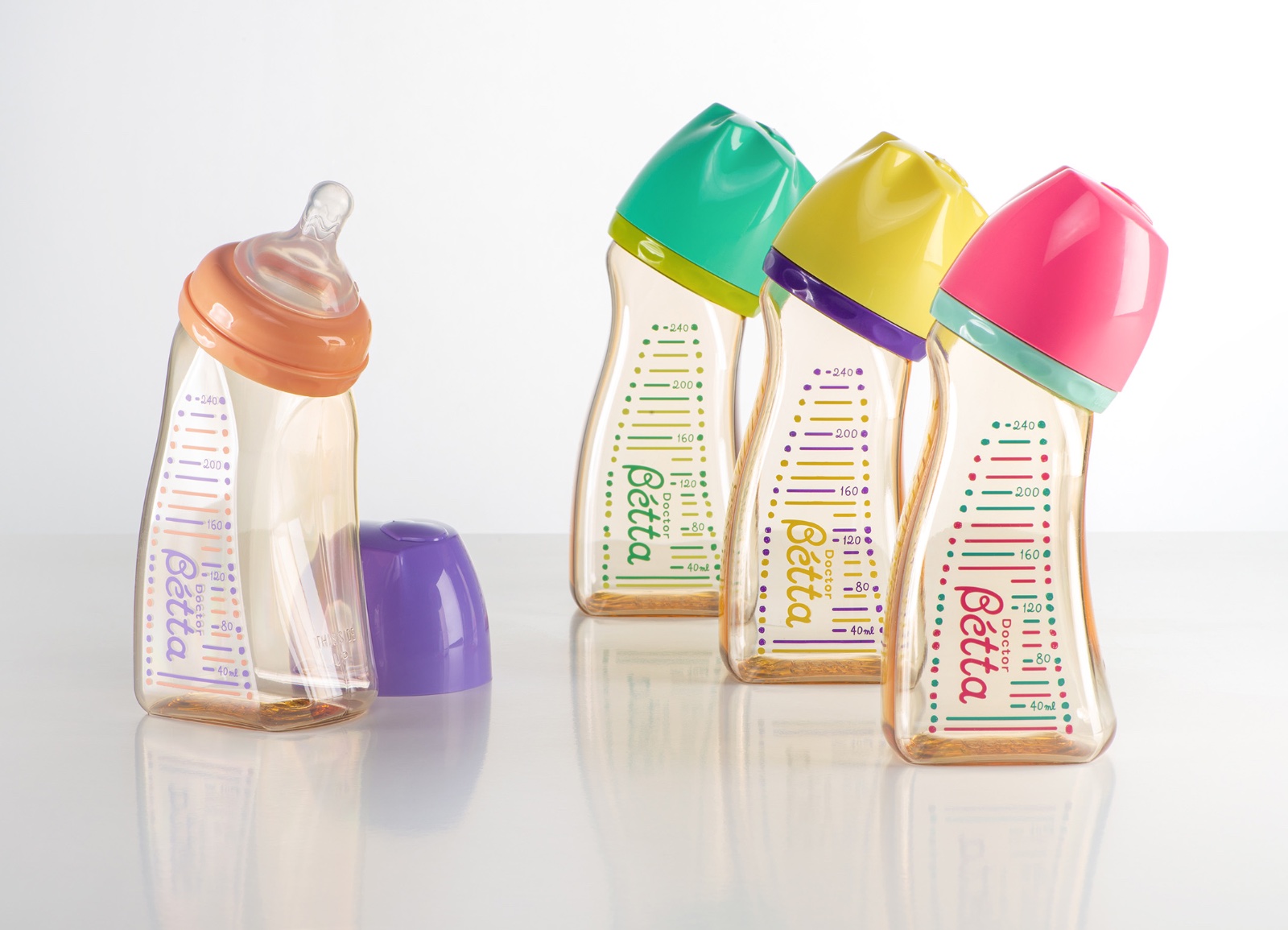
PA bottles are clear and light. PPSU bottles are made of the same material as hospital sterilisation equipment. Set the two datasheets side by side and you can see which leads where — and why the word 'margin' matters in a baby bottle.
PPSU is one tier up
Plastics are grouped by continuous service temperature into commodity, engineering and super-engineering classes. PPSU is in the top, super-engineering class; PA is in the engineering class below it.
Proven somewhere harsher than any home
PPSU is used in reusable hospital instruments steam-sterilised thousands of times at 134°C and in aircraft cabin interiors. In BASF testing it showed no cracks after 2,000 cycles at 134°C. No sterilisation done at home is harsher than that.
120°C of margin above boiling, against 45°C
PPSU starts to soften at 220°C, transparent PA at 145°C. The distance left above boiling water at 100°C is the margin that absorbs an overheating steriliser, a microwave and a year of daily use. Transparent PA is food-contact compliant and can be boiled, but its margin does not reach PPSU's.
PPSU stands for polyphenylsulfone, an amorphous high-heat resin in the sulfone family. The family has three members — PSU (polysulfone), PESU (polyethersulfone) and PPSU — and PPSU has the highest impact toughness of the three. BASF supplies the family under the Ultrason® name.
PA stands for polyamide, the family commonly called nylon. The PA used in baby bottles is not ordinary nylon (PA6, PA66) or PA11 (nylon 11) but a transparent polyamide designed so that almost no light-scattering crystals form. Arkema supplies it as Rilsan® Clear and sources part of the raw material from castor oil.
Source: Industry classification · BASF Ultrason® material
| PPSU | Transparent PA | |
|---|---|---|
| Maker | BASF SE | Arkema S.A. |
| Headquarters | Ludwigshafen, Germany | La Défense, France |
| Trade name | Ultrason | Rilsan Clear |
| Grade compared | P 3010 | G850 Rnew |
| 2025 sales | €59.7 billion | €9.1 billion |
| C&EN Global Top 50ranked by 2025 chemical sales | No. 1 (seventh year running) | No. 38 |
Source: BASF Report 2025 · Arkema full-year 2025 results (26 February 2026) · C&EN Global Top 50 (July 2026, based on 2025 chemical sales) · product datasheets
Two materials are compared: polyphenylsulfone (PPSU) as BASF Ultrason® P 3010, and transparent polyamide (PA) as Arkema Rilsan® Clear G850 Rnew, a higher-heat injection grade in Arkema's transparent PA range. Bottle makers do not disclose the raw-material grade in a given bottle, so this article compares materials, not products. From the two datasheets (BASF, February 2026; PA, September 2026) we took only properties measured on the same international test method.
The PA figures are published as two values, dry and conditioned. Polyamide takes up moisture from the air and its properties change with it, so the as-moulded state and the moisture-equilibrium state are reported separately. A baby bottle is in contact with water most of its life, so the conditioned value is closer to real use. PPSU is published as a single value at 23°C.
Source: Manufacturer datasheets
The 'starts to soften' point in the chart is what engineers call the glass transition temperature. As a plastic approaches it, its stiffness falls quickly. Boiling water is 100°C and both materials soften above that, so both can be sterilised in boiling water. The difference is how much is left above it.
Margin is the distance to the limit. It is the same idea as building a lift rated for 10 people to carry 15. A bottle is sterilised several times a day for close to a year, and in that time a steriliser will overheat, fat in a microwave will pass 100°C by a wide margin, and a brush will leave scratches — all within normal use. On those days the margin decides the outcome. PPSU has 120°C left; transparent PA has 45°C. The difference between the two is not whether sterilisation works, but whether the result stays the same however many times it is repeated and however far the conditions drift.
| Property | Test method | PPSU · Ultrason® P 3010 | Transparent PA · Rilsan® Clear G850 Rnew |
|---|---|---|---|
| Glass transition temperaturewhere it starts to soften | ISO 11357 | 220°C | 145°C |
| Heat deflection temperature (1.8 MPa)where it starts to bend under load | ISO 75 | 197°C | 120°C |
| Tensile modulusstiffness | ISO 527 | 2,250 MPa | 1,680 / 1,640 MPa |
| Yield stressforce at which it starts to stretch permanently | ISO 527 | 74 MPa | 64 / 58 MPa |
| Notched impact 23°Csurviving a drop after a scratch | ISO 179/1eA | 70 kJ/m² | – / 8.5 kJ/m² |
| Notched impact −30°Cthe same test after freezer storage | ISO 179/1eA | 50 kJ/m² | 8.6 / 11.4 kJ/m² |
| Unnotched impactdropping a new, unscratched bottle | ISO 179/1eU | No break | No break |
| Densityweight for the same volume | ISO 1183 | 1.285 g/cm³ | 1.01 g/cm³ |
For PA, the value before '/' is dry (as moulded) and after it conditioned (moisture equilibrium); '–' means not published. All are typical values, not specifications.
Source: BASF Ultrason® P 3010 NAT datasheet (Feb 2026) · Arkema Rilsan® Clear G850 Rnew datasheet (Sep 2026)
The quickest way to understand a material is to see where it is used. In hospitals PPSU is the standard material for instruments sterilised in 121–134°C steam and used again — surgical trays, endoscope parts, dental instruments. In BASF testing Ultrason® P showed no cracks after 2,000 sterilisation cycles at 134°C under load. In aircraft it is used for cabin interior parts that must meet fire, smoke and toxicity rules; in buildings, for hot-water plumbing fittings with hot water running through them continuously.
What this list has in common is 'hot, repeated and long-lived'. A baby bottle faces all three, at lower intensity. Transparent PA is a material whose strengths lie where clarity and low weight matter — eyewear frames, sports goods — and it is not used where PPSU is the standard, such as repeated steam sterilisation. BASF's comparison table likewise rates amorphous PA as poor for steam autoclaving.
| Situation · condition | PPSU (P 3010) | Transparent PA (G850 Rnew) |
|---|---|---|
| Boiled in water · 100°C | 120°C margin · no issue | 45°C margin · possible |
| Home steam steriliser · about 100°C steam | Ample margin | Possible |
| Dishwasher · hot rinse, detergent | Good (BASF table) | Good (BASF table) |
| Microwave sterilisation · 100°C with water, higher with fat | Excellent (BASF table) | Good (BASF table) |
| Hospital steam autoclave · 121–134°C | No cracks after 2,000 cycles at 134°C under load | Above its 120°C bending point · poor |
| Under stress with formula or detergent on it · stress-crack test | No cracks · rating 0 (BASF) | No published test values |
| Heated and washed daily for over a year · long-term service | Up to 180°C continuous · 20,000-hour test | Not stated on datasheet |
| Dropped after a scratch · notched impact | 70 kJ/m² | 8.5 kJ/m² |
'BASF table' is the comparison of transparent materials in BASF's Ultrason® for household and catering brochure (four-level rating). It is BASF's rating for amorphous PA as a class, not a test result for a specific grade.
Source: Manufacturer datasheets · BASF Ultrason® for household and catering (2023)
- Glass transition temperature (Tg)
- The temperature at which a plastic loses its hardness and starts to soften. Stiffness falls sharply as it is approached.
- Heat deflection temperature (HDT)
- The temperature at which a test bar under a set load (1.8 MPa) bends by a defined amount. The practical upper limit for parts under load.
- Margin (safety margin)
- The distance between the real use temperature and the material's limit. It is what keeps the outcome unchanged when conditions drift — an overheating steriliser, fat in the microwave, a scratch.
- Super-engineering plastic
- The top class of plastics, usable continuously above 150°C. PPSU and PEEK belong here; used in medical, aerospace and industrial parts.
- Notched impact strength
- The energy needed to break a test bar with a notch cut in it. It shows how well the material copes where stress concentrates, at scratches and corners.
- Dry · conditioned
- As moulded with no moisture, and after taking up moisture from the air to equilibrium. Polyamide gives different values in the two states.
- Stress cracking
- Fine cracks that form when a stressed plastic meets certain chemicals. Mostly an issue for amorphous materials.
- Steam autoclave
- The medical standard of sterilising with saturated steam at 121°C or 134°C. Harsher than a home steam steriliser (about 100°C).
'PA bottle' only tells you the family. Heat resistance in transparent PA varies by maker and grade; the figures here are for Arkema's high-heat transparent grade G850 Rnew. For a product designed to be boiled, the raw-material grade and its datasheet are the starting point. PPSU, as a family, starts to soften around 220°C in every grade, so its gap to boiling water does not move much from grade to grade.
Scratches are a matter of time. The notched impact gap (70 against 8.5 kJ/m²) is a scratched bottle being dropped. A new, unscratched bottle does not break in either material, but once brush marks or corners concentrate stress the difference appears — the condition an older bottle moves towards.
In short: both materials are declared food-contact compliant by their makers, and bottles sold in Korea pass migration testing under the MFDS Standards and Specifications for Utensils, Containers and Packages. The starting line is the same. The difference is the margin beyond it. If clarity and weight come first, transparent PA is a reasonable choice on the data too. If repeated sterilisation and long-term use are the premise, the heat margin, the sterilisation record and post-scratch impact toughness all point the same way: the material that brings the margin proven in hospitals and aircraft to a baby bottle is PPSU.
In fairness, there is a downside to record. PPSU costs more than transparent PA. It is a high-heat resin polymerised and processed above 340°C, so the raw material is priced higher and moulding temperatures and drying are more demanding. That cost is the price of the margin described above — 220°C and 2,000 sterilisation cycles. It is why PPSU sits in the premium tier of the bottle market, and equally why PA wins a comparison made on price alone. What you put a value on decides the choice.
Frequently asked questions
Food-contact recertification — from material to documents
Tell us your current material, product category and target market, and we will map the conversion route and the certification documents you need. Evaluation samples are availablf charge.
Related reading
More from us
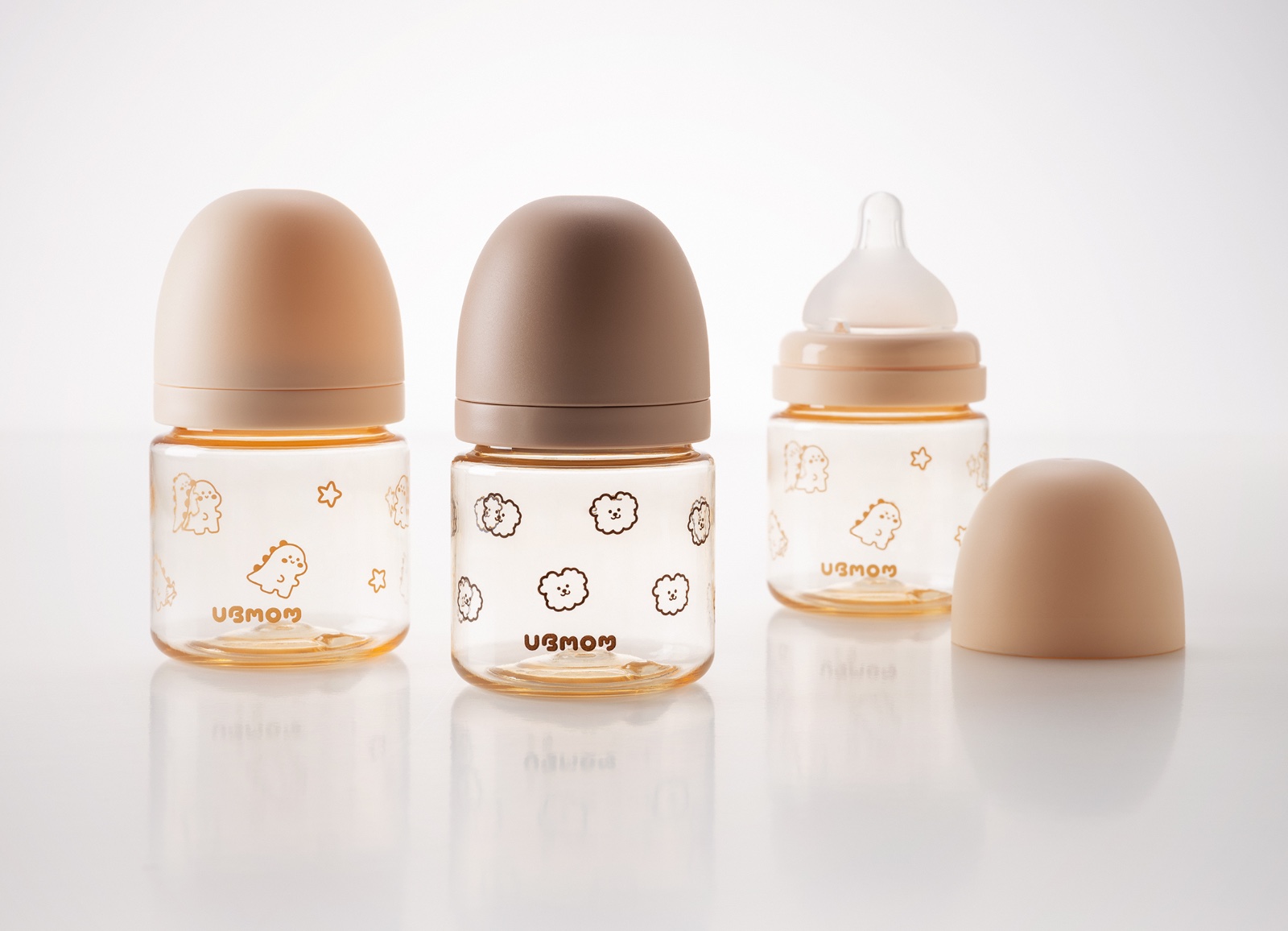
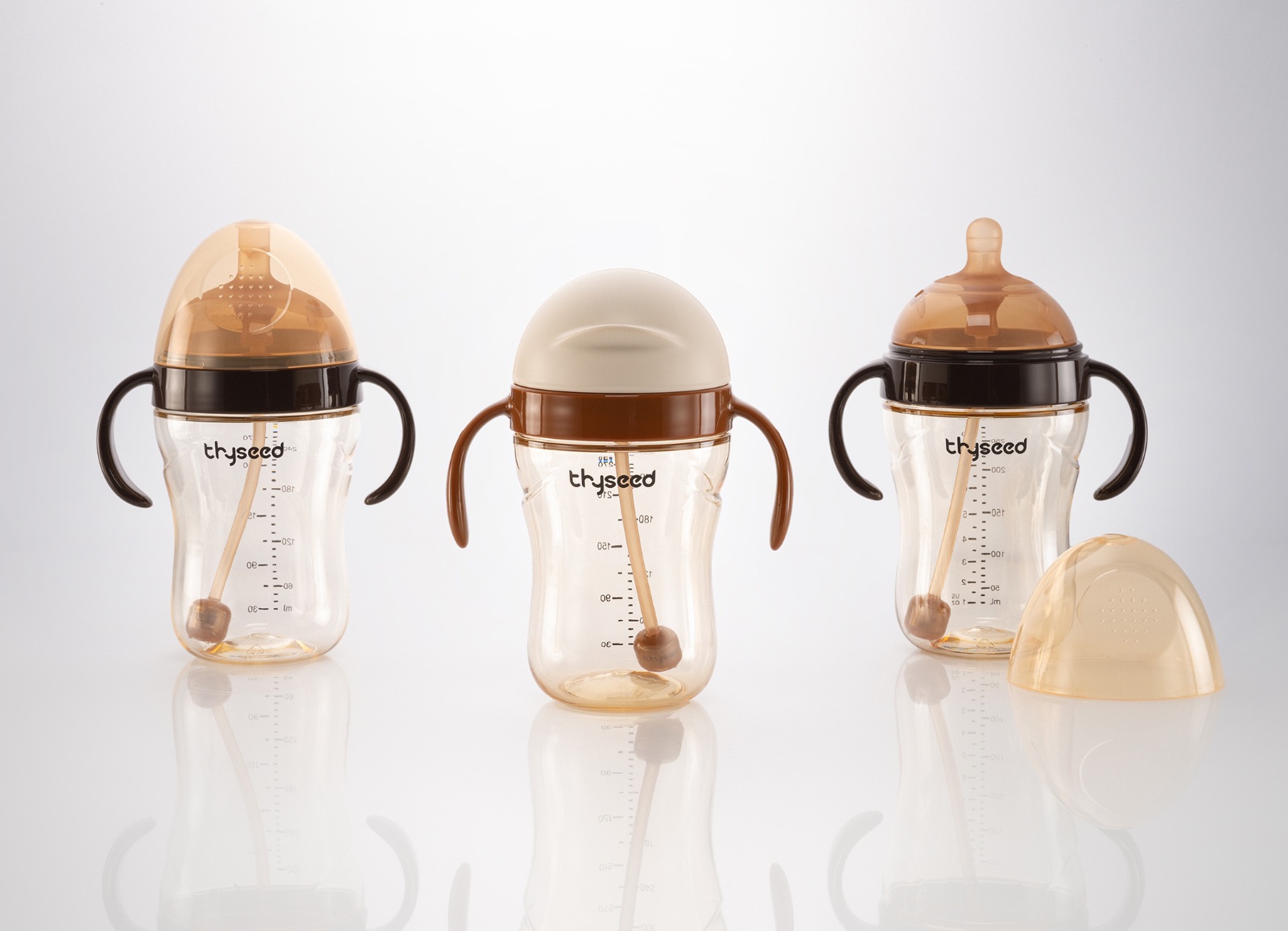
※ Written by Octud from values published in the BASF Ultrason® P 3010 NAT datasheet (February 2026), the Arkema Rilsan® Clear G850 Rnew datasheet (dated 21 September 2026), the BASF brochure Ultrason® for household and catering (September 2023) and BASF Ultrason® application material. Figures are typical values, not specifications. The three-tier classification of plastics is the industry grouping by continuous service temperature. Ratings marked 'BASF table' are BASF's assessment of amorphous PA as a class. This article does not assess any specific bottle product, and the raw-material grade in any specific bottle was not verified. Photos are BASF press photos of bottles moulded in Ultrason® P. Everything from 'Octud note' onward is Octud's technical commentary and is not taken from manufacturer material. Ultrason® is a registered trademark of BASF; Rilsan® and Rnew® are registered trademarks of Arkema.
Tritan™ and Eastar™ are trademarks of Eastman Chemical Company, INFINO® of Lotte Chemical, and Ultrason® of BASF SE. Competitor product names are used solely for factual identification and comparison, and do not imply affiliation or endorsement.